(Introduction)
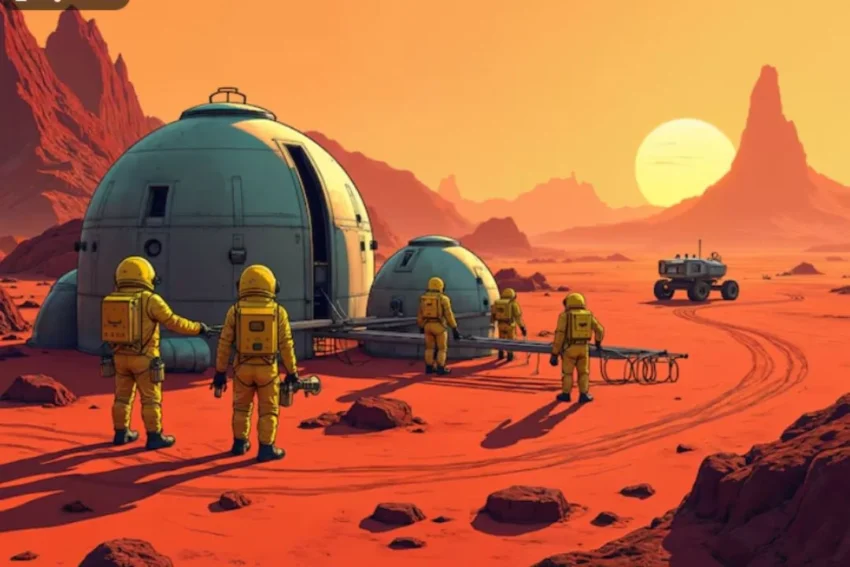
A vast part of the universe is beyond the reach of man, and we have only explored a small part so far. One of these amazing and fascinating worlds is “Mars”. Which is one of the closest planets to Earth. The presence of life on this planet, its atmosphere, and research about the land there have always attracted humans.
Mars, known as the “Red Planet”, has always been the focus of human attention. Mars has been mentioned in various cultures for thousands of years, but in the modern era, as science and technology advanced, humans have adopted Mars exploration as a serious and realistic project.
Mars exploration began in the 1960s, when satellites were first sent to explore Mars. Since then, various robotic and space missions have explored the planet’s surface, and in today’s most advanced space missions, NASA and other space agencies are preparing to send humans to Mars.
Introduction to Mars
Mars is a “red planet” and its color is due to the iron oxide (rust) it contains. It is the fourth planet from Earth and the fifth closest to the Sun after Earth. Its diameter is about half that of Earth, but its volume is still much smaller than Earth’s.
The environment of Mars is very different from that of Earth. The climate here is extremely cold, with average temperatures around -60 degrees Celsius. The atmosphere of Mars is extremely thin and consists mostly of carbon dioxide (CO₂). The air pressure on Mars is much lower than on Earth, so special facilities would be needed for humans to survive there.
Surface features of Mars
The surface of Mars is very different from Earth. It has many unique geographical features, including mountains, valleys, deserts, and dry riverbeds. One prominent feature seen on the surface of Mars is Olympus Mons — the largest volcano in the solar system.Its height is more than 22 kilometers, which is three times higher than “Mount Everest”, the largest volcano on Earth.
There are also various valleys on the surface of Mars, such as the “Valles Marineris”, which is one of the largest and deepest canyons in the world. This canyon is about 4000 km long and 7 km deep.
Another important feature on Mars is the presence of water. The presence of water on Earth is considered a sign of life, and the search for traces of water on Mars is an important goal of human research. Various investigations have shown that water once existed on the surface of Mars, and perhaps traces of liquid water can still be found in some parts.
Mars aerial exploration
Research on Mars began with space missions. In the late 1960s, when the space race between the United States and the Soviet Union was underway, various satellites were sent to study Mars. The purpose of these missions was to collect information about Mars and analyze its surface, atmosphere, and orbital structure.
One of the most famous missions is the Mars Reconnaissance Orbiter, which was sent into orbit around Mars by NASA in 2005. The mission provided important information about the surface of Mars, including signs of the presence of water and various geological features.
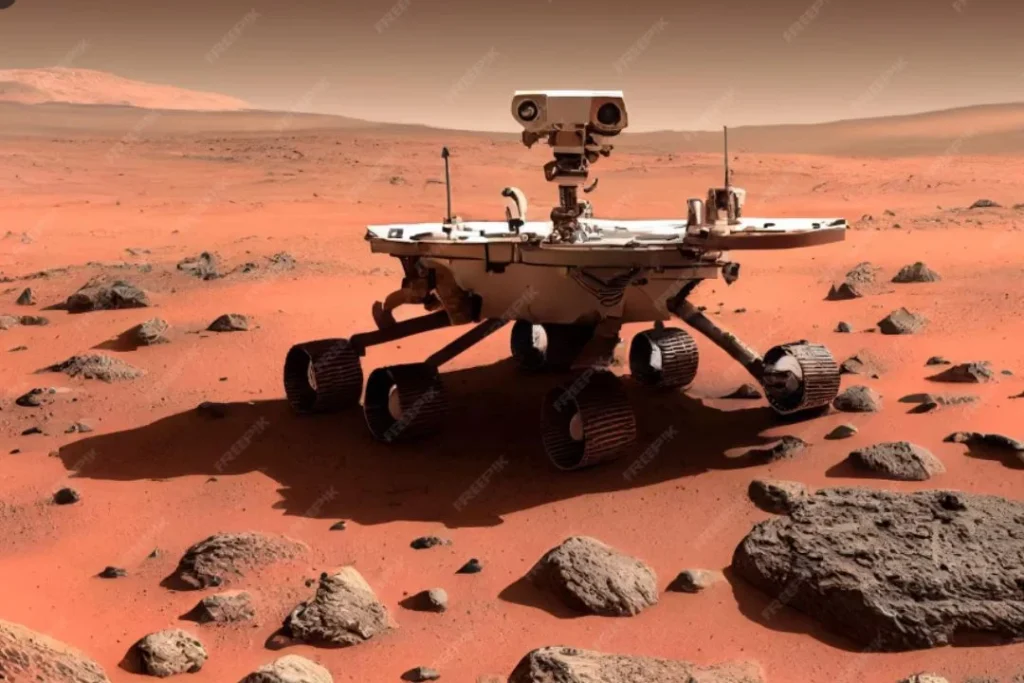
Another important mission was the Curiosity Rover, which landed on Mars in 2012. The rover’s purpose was to search for signs of life on the surface of Mars and to conduct chemical analyses of the soil and rocks there.
The various gases present in the atmosphere of Mars have also been examined, and it has been found that the amount of oxygen in the atmosphere of Mars is very low, while carbon dioxide dominates.
Human journey to Mars
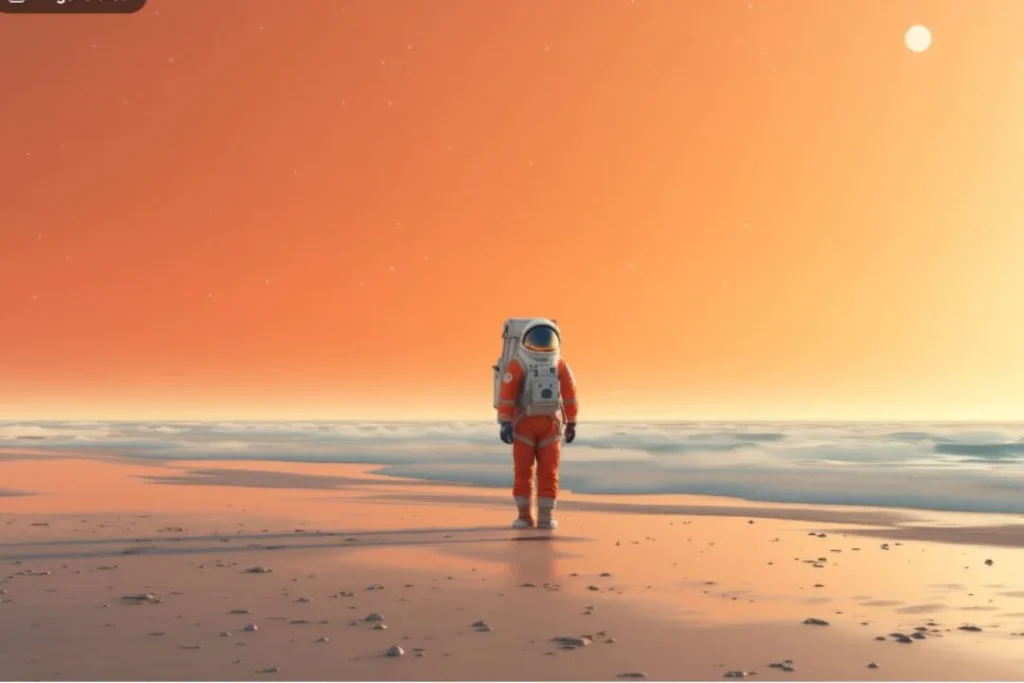
The aim of the investigations that have been carried out so far has been to send robots to the surface of Mars and collect information there. However, in the future, a human journey to Mars seems like a dream. NASA and other space agencies are currently preparing to send humans to Mars.
NASA has launched the “Artemis Program,” which aims to land a human on the Moon by the late 2020s and then send humans to Mars by 2030. The program is working on various technologies, such as spacecraft, methods of leaving Earth, and facilities for settling on the surface of Mars.
There are many challenges for humans to settle on Mars, such as the unusually cold temperature, low air pressure, and low oxygen on the surface. In addition, the human body will have to face many environmental problems to survive on Mars.
Searching for life on Mars
One important question that continues to haunt humans is whether there has ever been life on Mars. Signs of the presence of life on Mars have been searched for, and sometimes signs have been found that point to signs of life.
Some experts believe that there was some form of life on Mars in the past, as clear signs of the presence of water have been found there in the past. Although no clear evidence has been found yet, various space missions are busy finding an answer to this question.
The global impact of Mars research
Mars exploration is not only a major milestone in space exploration, but it is also having a profound impact on science, technology, and social development worldwide. This research has not only improved our understanding of space science, but has also brought revolutionary changes in various fields on Earth.
Impact on the world of science:
Mars exploration has given humans a new insight into space. This research provides us with details about how life might be possible on other planets in the universe. The presence of water on the surface of Mars,The rich carbon dioxide content in its atmosphere, and the discovery of various natural resources there, have given rise to various scientific theories and ideas on Earth. These discoveries have led scientists to think that life forms may exist on other planets.
Innovations in technology:
Mars exploration has brought about many revolutionary changes in the field of technology. The successful completion of space missions has been achieved using cutting-edge technology, such as robotic rovers, automated computer systems, and self-driving vehicles. These technologies are also being used in various industries on Earth.Such as automated vehicles, improvements in internet speeds, and increased efficiency of other industrial equipment.
Benefits for on-ground research:
Research on Mars not only provides important information about space, but it also has a direct impact on research on Earth. For example, by analyzing the soil and rocks on Mars, we are better understanding the formation of soil on Earth and the ecosystems there.Similarly, research conducted in space has provided more information about climate change and natural disasters on Earth.
Frequently Asked Questions (FAQs) about Mars exploration
Why is research on Mars important?
Research on Mars is essential to understanding the possibilities of life beyond Earth, analyzing its environment and geography, and finding conditions conducive to human habitation in space. It helps us understand the universe and opens the door to new technological and scientific advances for humans.
Is there life on Mars?
There is no conclusive evidence to prove that life exists on Mars. However, various space missions have discovered traces of water on the surface of Mars, evidence of the presence of water in the past, and signs of Earth-like conditions, which indicate that life may have existed there in the past.
How many missions has NASA sent to Mars?
NASA has sent several missions to Mars. These include famous missions such as the Mars Reconnaissance Orbiter, the Curiosity Rover, and the Mars 2020 rover. The goal of these missions is to conduct detailed investigations of the Martian surface, search for signs of water, and investigate the possibility of life.
When will human travel to Mars be possible?
NASA and other space agencies are preparing to send humans to Mars in the 2030s. After humans return to the Moon under NASA’s “Artemis Program,” the next step will be human exploration of Mars. However, more work is underway on advanced spacecraft, mission planning, and technology for reaching Mars from Earth.
What are the challenges for life on the surface of Mars?
Life on the surface of Mars is not possible because the environment there is extremely cold, the air pressure is very low, and the amount of oxygen is negligible. In addition, the lack of natural resources on the surface of Mars and the intense radiation also pose challenges for human survival. Modern technologies will be needed to meet these challenges.
What is the global impact of Mars research?
The global impact of Mars exploration is that it has raised the bar for scientific research and increased human understanding of space. This research has led to technological innovations and opened up new avenues for various industries. In addition, through space exploration, humans are gaining new perspectives on Earth’s resources and environmental changes.
(Conclusion)
Mars exploration has provided humans with important information about space and new possibilities for life. Although this research has many challenges, it may be possible for humans to travel to Mars and live there in the future. This research is not only revolutionizing space science, but is also helping in technological and scientific development on Earth.