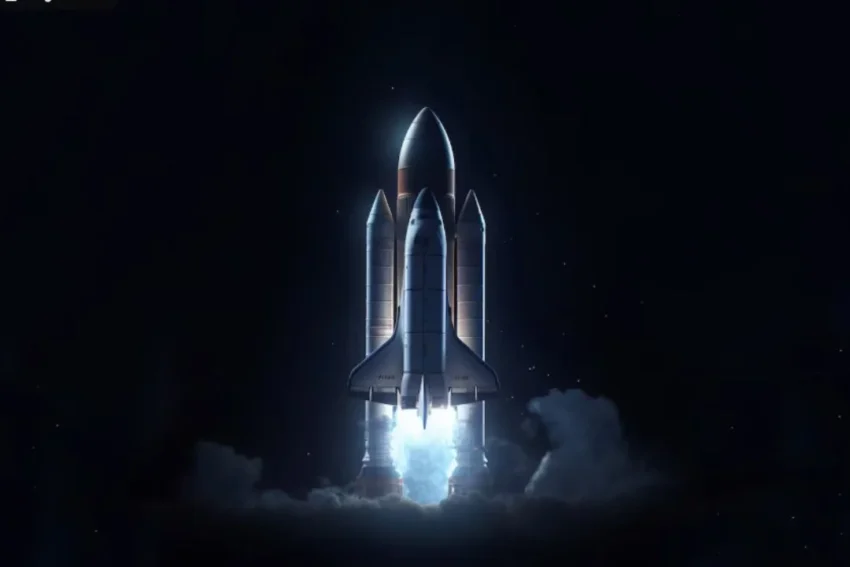
Rocket: The wonder of space tourism
A rocket is a means of breaking the Earth’s gravity and being able to go into space. The use of rockets is not limited to space missions, but also plays an important role in science, defense, and communications.
Structure of a rocket
A rocket typically has three main parts:
- Engine: This is what propels the rocket forward.
- Fuel tank: Stores fuel to power the rocket.
- Mission or payload: This part serves the rocket’s primary purpose, such as a satellite or human mission.
Types of rockets
There are several types of rockets:
- Space rockets: Used to carry humans or satellites into space.
- Defense rockets: Designed for military purposes.
- Scientific rockets: Used for research and experimental work.
Uses of rockets
Thanks to rockets, we can learn about the world beyond Earth today. It sends satellites into orbit, makes weather forecasting possible, and makes human space missions successful.
Rockets in the future
With the development of space science, rocket technology is improving. In the future, human travel to Mars and other planets may be possible through rockets, and space tourism may also be available to ordinary people.
A history of rockets
Rocket technology originated in ancient China, where rocket-like volcanoes and military equipment were made. The twentieth century saw significant advances in rocket science, exemplified by NASA’s space missions and the launch of the Sputnik satellite.
Types of rockets
Space rocket
- For human missions
- To put satellites into orbit
Defense rocket
- For military purposes
- For ground or air attacks
Scientific rocket
- Research Experiments
- Earth’s Atmospheric and Meteorological Research
Structure of a rocket
- A rocket has three basic parts:
- Engine: Provides the power to propel the rocket forward
- Fuel tanks: The rocket’s energy source
- Mission or payload: Satellite, human mission, or scientific instrument
How a rocket works
A rocket creates kinetic energy by burning fuel, which gives it the power to propel it from Earth into space.
Early history and ancient rockets
The story of space travel and rocket technology in human history spans centuries. Although today we know about modern rockets and international space missions, the foundation of rocketry was laid in ancient times. Man has always looked at the vastness of the sky and dreamed of reaching it.In the early days, this dream did not come true, but over time, human exploration and creativity made it possible.
Ancient China and the Origins of Rockets
Rocket technology originated in China around the 14th century. Chinese experts discovered gunpowder and used it for various purposes. Early rockets were actually used as military weapons, called “fireworks” or “gunpowder arrows.” These rockets were mounted on trees or walls and fired at the enemy.
Chinese rocket makers experimented for decades. They improved the design of rockets by using different materials, metals, and wood. Early rockets typically consisted of a small tube filled with gunpowder and set in motion by lighting a fire.
Military use
In ancient China, rockets were most widely used in the military field. Using rockets against enemy troops was terrifying. These objects, filled with gunpowder, exploded and scattered the enemy’s ranks. At that time, the original purpose of rockets was simply fire and explosion, but it was the first step in a revolutionary technology for humanity.
Early rocket experiments in other countries
After China, knowledge of rocket technology gradually spread to other countries. Rocket-making experiments also took place in the Arab world, especially in the 13th and 14th centuries. Arab scientists developed small rockets using gunpowder, which were used for defensive and technical purposes.
Rocket technology began in Europe a few centuries later. In the 16th century, rockets were used for military missions and sporting purposes. Early European rockets were generally small and could not travel very far, but they were also the basis for modern rockets.
Basic principles of rockets and how they work
The principles of early rocket propulsion are very similar to those of modern rockets today. The propellant or fuel in a rocket burns, releasing smoke and gases, which propels the rocket forward. This principle remains fundamental to rocket science today and is described by the principle of “action-reaction”, which is consistent with Newton’s third law.
This simple principle of the early rocket enabled man to gradually build complex rockets that could break the Earth’s gravity and travel into space.
Rockets and Culture
In ancient times, rockets were not just weapons but also became part of civilization. In China and Arab countries, rocket-making experiments were also included in poetry, stories, and fine arts. The movement and explosion of rockets caused wonder and imagination for those who saw them. Children and ordinary people also used small rockets in games.
Development of scientific foundations

The scientific foundations of rocketry began to take shape in the 17th and 18th centuries. Scientists in Europe conducted various experiments and tried to understand the relationship between rocket motion, speed, and fuel. During this period, rockets became not just weapons of war but also a means of research and scientific discovery.
Important personalities
- Konstantin Tsiolkovsky: Russian scientist who proposed ideas for human space travel in the early 20th century.
- Robert Goddard: American scientist who developed the first liquid-fueled rockets and laid the foundation for modern rocket technology.
These figures play a key role in adapting ancient rocket principles to the modern era.
Early rocket impacts
Early rockets expanded human imagination. They proved that humans could go beyond the confines of Earth. Early rockets paved the way for future great space missions, such as human landings on the Moon, missions to Mars, and the International Space Station project.
Modern rocket structure
A modern rocket is made up of several parts. Together, these parts help propel the rocket into space and complete its mission.
Engine
The most important part of a rocket. The engine produces energy by burning fuel and propels the rocket forward. Modern rockets typically use both liquid and solid fuels.
Fuel Tank
Fuel provides energy for the rocket. A liquid-fueled rocket has two or more tanks: one for fuel and one for oxygen.
Payload or mission module
This part serves the original purpose of the rocket, such as a satellite, human cabin, or research equipment.
Multi-stage Design
Modern rockets are often built in several stages. Each stage gives the rocket more speed and is later separated to reduce the load and allow the rocket to travel a greater distance.
Navigation & Control System
These parts control the rocket’s direction, speed, and orbit. Modern rockets use computers and sensors to help keep the rocket on the right track.
Modern rockets and human space travel
Thanks to modern rocket technology, humans have been able to travel into space. Rockets like the Falcon 9, Saturn V, and Space Shuttle have not only put humans into orbit, but have also made possible missions to Mars, the Moon, and other planets.
Space tourism
Today, ordinary people can experience space with the help of rockets. Companies like SpaceX and Blue Origin have developed rockets that provide short space trips. These rockets lift off from Earth into space, provide a space experience for a while, and then return to Earth.
Future rocket technology
Rocket technology is advancing further in the modern era. Scientists are working on developing faster, more energy-efficient, and more environmentally friendly rockets. In the future, these rockets will be able to take humans to Mars, Jupiter, and other planets, making space tourism possible for ordinary people.
Important space missions and rocket uses
The development of rocket technology not only enabled humans to set foot in space, but also revolutionized science, research, communications, and defense. Various space missions in the 20th and 21st centuries proved that rockets are not just a means of travel but also an important tool for research, development, and improving human life.
Types of space missions
Manned Missions
These missions are designed to take humans into space. The purpose of these missions is not only travel but also research, experiments, and preparation for future long-duration space missions.
- Apollo missions: The famous American series, in which Apollo 11 landed humans on the moon for the first time.
- Soyuz missions: Russian space missions, used to carry humans into Earth orbit.
- International Space Station (ISS): This is a continuous human mission where scientists conduct various experiments.
- Satellite Missions
Satellites are delivered to Earth’s orbit by rockets. These missions are used in many aspects of daily life:
- Communications: Telephone, Internet, TV broadcasts
- Meteorology: Weather forecasting and storm observation
- Defense: Military surveillance and research
- Astronomy: Telescopes and research instruments in space
Remote Missions (Unmanned or Robotic Missions)
These missions explore space without human presence. They help obtain information about Mars, Jupiter, Saturn, and other planets.
- Viking Missions: Exploring Mars
- Hubble Space Telescope: Discovering distant stars and galaxies
- Geometric and meteorological rocket missions: Examining Earth’s atmosphere and geologic changes
Main uses of rockets
Sending humans into space
Through rockets, humans can travel into space, reach orbit, and in the future even reach other planets. This is humanity’s greatest achievement, which has given new dimensions to our lives and science.
Satellites and communications
Today’s communication system would not be possible without rockets. Telephones, TV, the Internet, and GPS systems all work thanks to satellites launched into orbit by rockets.
Research and scientific missions
Space rockets are used to explore the Earth’s atmosphere, other planets, stars, and the universe. These missions provide us with knowledge about astronomy, meteorology, and other scientific facts.
Defensive use
Rocket technology is also used in the military field. Ballistic rockets and modern missile systems increase the country’s defense power and maintain global balance.
Space tourism
Nowadays, many companies are developing rockets for space tourism. People can experience space for a short time, experience weightlessness in space, and see the Earth from space.
Examples of important space missions
Apollo 11
In 1969, Neil Armstrong and Buzz Aldrin first set foot on the moon. It was the greatest achievement of human space travel.
The Falcon
A rocket developed by SpaceX, which can be reused repeatedly and carries satellites into orbit along with human missions.
Hubble Space Telescope
Space telescopes that send images of stars, galaxies, and planets into space and provide new information to science.
Soyuz Missions
Russian missions that continuously go into orbit for human travel and stay in contact with other space stations.
The future of rocket use
- The future of akt technology has many possibilities:
- Mars missions: Plans to take humans to Mars
- Long-term space habitation: Permanent human settlement in space
- Instant communication and global internet: Internet to every corner of the world via satellite
- Environmental monitoring: Protecting the Earth’s climate and natural resources
Frequently Asked Questions (FAQs) about rocket technology and space missions
What is a rocket?
A rocket is a device that is powered by burning fuel and can be lifted high into the Earth or space. It is used for human travel, research, launching satellites, and defense purposes.
How does a rocket work?
Fuel is burned in a rocket, which creates heat and thrust. This thrust propels the rocket forward. Modern rockets include computers and navigation systems that control the rocket’s direction and speed.
What are the types of rockets?
- The main types of rockets are:
- Space rockets – carry people or goods into space.
- Missiles – for military and defense purposes.
- Scientific rockets – for research and observation.
- Suborbital rockets – for short space travel.
What types of fuel are used in rockets?
- Two types of fuel are commonly used in rockets:
- Solid fuel: Used for immediate energy.
- Liquid fuel: Used for greater control and longer range.
What are the main parts of a rocket?
The main parts of a rocket are:
- Engine – produces power.
- Fuel Tank – stores fuel.
- Payload – the main target of the mission, such as a satellite or a human.
- Multi-stage Design – for reaching greater distances.
- Navigation and Control System – controls the direction and orbit of the rocket.
What are the types of space missions?
The main types of space missions are:
- Manned Missions – Humans travel into space, such as Apollo 11.
- Satellite Missions – Sending satellites into Earth orbit.
- Remote or Robotic Missions (Unmanned Missions) – For the exploration of Mars or other planets.
What role does rocket technology play in everyday life?

Today’s telephones, the Internet, GPS, TV broadcasts, and weather forecasting would not be possible without rocket technology. It is also essential for defense, research, and space tourism.
(Conclusion)
Rocket technology has not only allowed humanity to venture into space, but has also revolutionized science, research, communications, and defense around the world. Space missions have helped explore new worlds, while satellites and rockets have provided countless benefits in our daily lives.In the future, the development of rocket technology is expected to lead to the permanent presence of humans in space, travel to other planets, and space tourism becoming more common. All of these developments are the result of human exploration and research, which are leading us to new possibilities.