
Introduction to Football
Among the world’s most popular sports, if there is one sport that can be called a “universal language,” it is football. The game is played in almost every country in the world, whether it is the modern stadiums of Europe or the clay fields of Africa, the coastal regions of South America or the streets of Asia — everywhere there is a passion for getting the ball into the net.
Football is not just a game, it is a culture, a passion and a means of global communication. This game has erased all differences of language, race, religion and color. This is why football is often called “The Beautiful Game”.
The history of football spans centuries. Various forms of ball play were practiced in ancient China, Egypt, and Greece, but modern football was founded in England in the 19th century. The game’s rules were formalized with the formation of the Football Association (FA) in 1863. Football then spread rapidly throughout Europe and the rest of the world, and today the sport has become a global industry.
The importance of soccer skills
Success in soccer depends not only on physical strength or speed, but also on the skill of the player.
Soccer skills are the foundation on which a player builds his identity. Whether it is dribbling, passing, shooting, heading or defense — skill in every aspect is the key to success.
Dribbling skills
Dribbling is the art of keeping the ball in your possession and deceiving your opponents.
Some of the world’s greatest players, such as Lionel Messi, Neymar, and Ronaldinho, are known for their dribbling skills.
This skill gives the player freedom on the field — he can change direction, increase speed, and leave defenders helpless.
Passing skills
Passing is the heart of football. The cohesion and rhythm of a team depends on accurate passing.
For example, the Spanish team invented the Tiki-Taka style, in which the opposing team is tired through short, fast passes.
Passing requires not only accuracy but also timing. One wrong pass can upset the balance of the entire game.
Shooting skills
Scoring goals is the main objective of football, and this is only possible with shooting skills.
A great shooter not only delivers a powerful kick but also takes into account the angle, distance, and position of the goalkeeper.
Defense and Tackling
A strong defense provides the foundation for a team. Defensive skill is not just about winning the ball, but also about reading the opponent’s movements and predicting the game. Players like Sergio Ramos, Virgil van Dijk and Paolo Maldini have gone down in football history with their defensive skills.
The role of skills in the World Cup
The FIFA World Cup is the arena where the world’s best players showcase their skills. Held every four years, this tournament is one of the most watched sports in the world.
The World Cup is a test not only of individual skill but also of the collective discipline of the team.
A combination of skill and strategy
The team that succeeds in the World Cup is the one that combines skill and strategy.
For example, in 2010, Spain surprised the world with their Tiki-Taka style, in 2014, Germany dominated with fast play and accurate passing, while in 2022, Argentina, led by Messi, presented a brilliant combination of skill, passion, and teamwork.
Emerging talents of young players
The World Cup is a great opportunity for young players to prove themselves.
Every World Cup sees the birth of a new star — like Thierry Henry in 1998, James Rodriguez in 2014, and Julian Alvarez in 2022.
Behind the success of these players is their exceptional soccer skills.
The global impact of soccer skills
The World Cup is not just a tournament, but a global learning center, where new techniques, training methods, and modern trends in the game are born.
Coaches and players around the world are inspired by the World Cup and make changes to their game.
That is why the “Soccer Skill World Cup” can be called the pivot of football’s development — an opportunity where the world sees what real skill is.
The Role of Skills in the World Cup — An In-Depth Review
The FIFA World Cup is one of the biggest sporting events in the world. It is the arena where every player presents their lifetime of hard work, training, and skill to the world.
In the World Cup, it is not just physical strength or speed, but also technical skill, tactical awareness, and decision-making under pressure that guarantee success.
History of the origins and skills of the World Cup
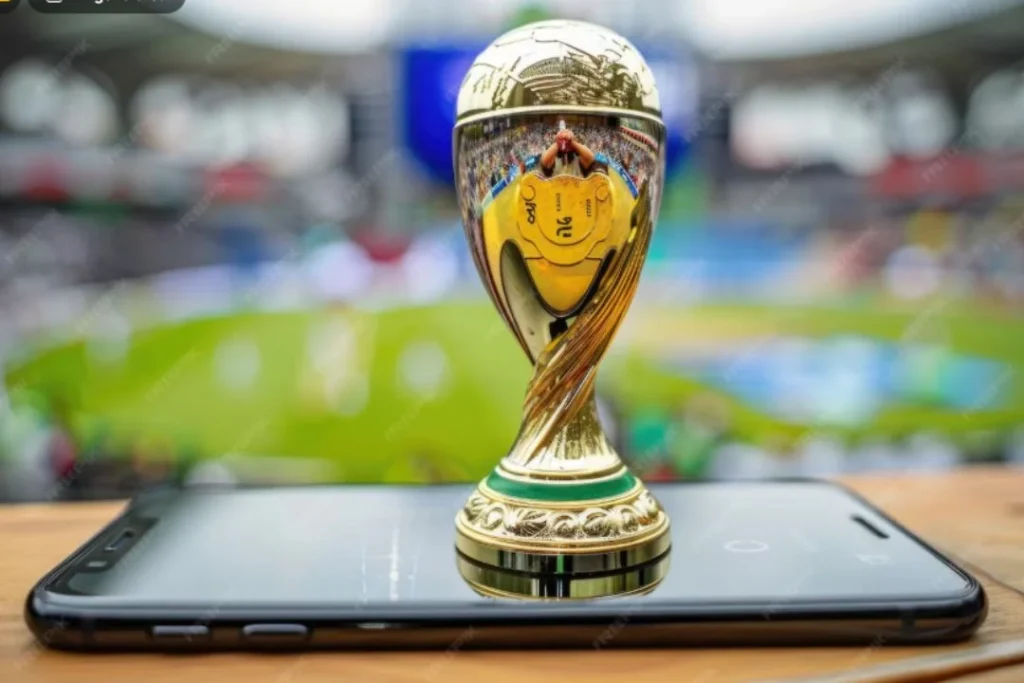
The first edition of the World Cup was held in Uruguay in 1930. At that time, the rules and style of football in the world were much simpler than they are today.
The skills of the players were basic — ball control, direct shooting, and basic passing.
But as time went on, football became a technical and mental game.In the 1950s, Brazil introduced the world to the “Junga Style,” a beautiful blend of art, dance, and dribbling.
This was the era when Pelé captivated the world with his technical skills.
Similarly, in the 1970s, the Netherlands introduced the concept of “Total Football,” in which each player had the ability to play in multiple positions.This evolution has brought football to the point where today every player must master not just one but multiple skills.
Types of football skills that prove decisive in the World Cup
Ball Control
Controlling the ball under the pressure of the World Cup is no less than an art.
A momentary mistake can lead to losing the ball and conceding a goal.
Players like Luka Modric, Kevin De Bruyne, and N’Golo Kante maintain the team’s balance with their calm ball control.
Dribbling Under Pressure
When millions of viewers are watching and the opposing team’s defense is steel, dribbling is the weapon that makes the difference. In the history of the World Cup, players like Messi, Maradona, and George Best have set examples of dribbling that are still remembered today.
Free Kicks and Set Piece Skills
- Many World Cup matches are decided by a free kick or corner kick.
- Accuracy and skill are essential in dead ball situations.
- Players like David Beckham, Ronaldo, and James Ward-Prowse changed the course of the match with their free kick skills.
Defensive Intelligence
Skill is important not only in attack but also in defense.
Teams that win the World Cup always have a strong defensive line that not only snatches the ball but also reads the opponent’s plans.
Players like Kane, Ramos, Thiago Silva, and Virgil van Dijk are examples of this intelligence.
Goalkeeper reflexes and skills
Often World Cup matches are decided by a brilliant save by a goalkeeper. Goalkeepers like Oliver Kahn (2002), Buffon (2006), and Emiliano Martinez (2022) proved that goalkeeping is an art in itself.
Historic Moments — When Expertise Changed History
1958 — The Rise of Yellow
At just 17 years old, Pele brought Brazil its first World Cup trophy with his dribbling and shooting skills.
This was the moment the world learned that soccer skills were a universal language.
1986 — Maradona’s “Hand of God” and “Goal of the Century”
Argentine legend Diego Maradona scored a goal against England that will forever be remembered in history. The feat of dribbling the ball past five players and into the net was the height of skill.
2002 — Brazilian Art Style Football
Ronaldo, Ronaldinho, and Rivaldo demonstrated technique, footwork, and teamwork.
This World Cup proves that creative skill always wins in football.
2022 — The Magic of Lionel Messi
Messi delivered the best performance of his career at the Qatar World Cup. His passing, dribbling, and team-leading skills helped Argentina become world champions.
Modern football and scientific skills training
Today’s World Cup players don’t just play football, they also hone their skills through science and data.
Each team has analysts, physiotherapists, and skill coaches who analyze every touch and movement of the players.
Advanced training includes:
- Video analysis (performance review after each match)
- Virtual training (skill practice through VR)
- GPS tracking (calculation of running speed and fatigue)
- All these modern methods have skyrocketed the level of skill at the World Cup
The impact of expertise on the team level
The only team that succeeds in the World Cup is the one that has harmony among its players.
For example:
- Spain (2010) — passing and control skills
- Germany (2014) — organized defense and teamwork
- France (2018) — speed and individual skills
- Argentina (2022) — creative attacks and emotional leadership
- These teams are examples of how skill is not just the result of an individual, but also the result of collective action.
Frequently Asked Questions (FAQs) — Soccer Skill World Cup
What is meant by Soccer Skills?
Soccer skills refer to all the skills that make a soccer player successful on the field — such as dribbling, passing, shooting, defense, and ball control. These are the skills that turn an ordinary player into a global star.
Why are soccer skills important in the World Cup?
The World Cup is the biggest football event in the world. Every moment is decisive here. A perfect dribble, a precise pass, or a surprising shot can change the outcome of the match. Therefore, skills are the weapons that make a team a world champion.
Which players are famous for their soccer skills?
Many players in the world became famous thanks to their extraordinary skills, such as:
- Lionel Messi (Dribbling & Vision)
- Cristiano Ronaldo (Shooting & Aerial Skills)
- Neymar Jr. (Footwork & Creativity)
- Pele and Maradona (Classic Football Skills)
All of them set new examples of skill in the history of the World Cup.
How can soccer skills be improved in football training?
Regular practice, fitness, and video analysis are essential to improving soccer skills. Today, players are improving their performance through VR training, GPS tracking, and advanced technology.
Remember: “Small daily improvements add up to big success tomorrow.”
Are soccer skills developing rapidly in the USA?
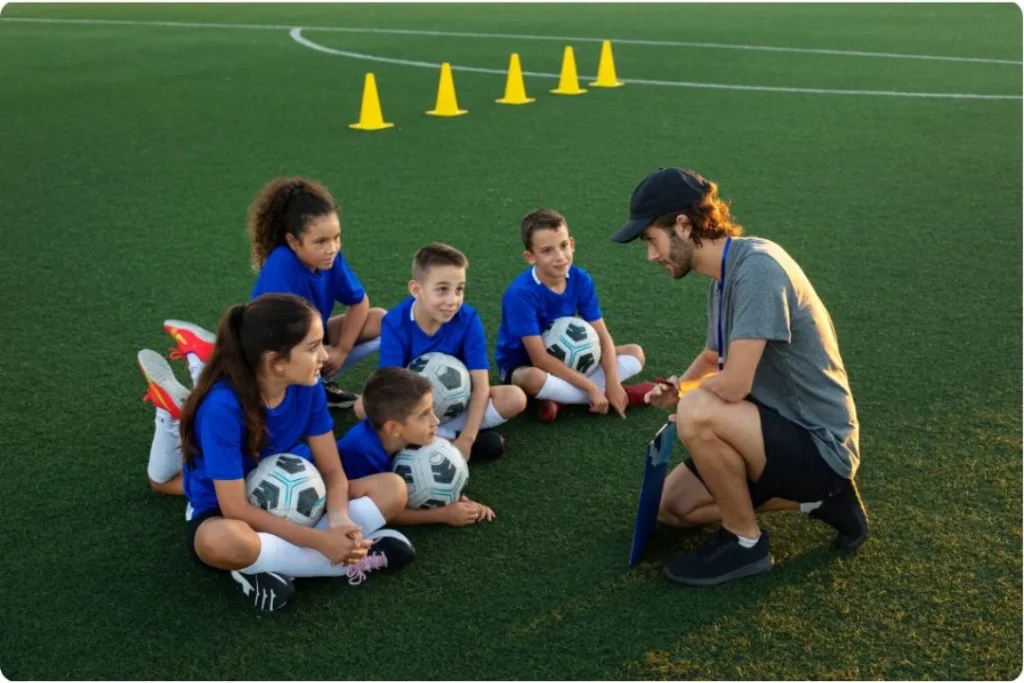
Yes, soccer has become very popular in the United States in the past decade.
Young players are undergoing modern coaching, fitness programs, and European-style training camps.
The USA women’s team is already a global standout, while the men’s team is also emerging with great talent.
(Conclusion)
“Soccer Skill World Cup” is not just a game, but a celebration of the hard work, passion, and skills of players from around the world.
It teaches us that success is not achieved by strength alone, but by intelligence, discipline, and teamwork.
Every pass, every goal, and every dribble is proof that football is not only played on the field, but also in the hearts.